Cosmetic Surgery

rhinoplasty surgery in delhi

Open vs Closed Rhinoplasty – Which One Is Better for You?

Your nose. Small detail, big impact. It can completely shift the way your face looks. No wonder rhinoplasty—better known as a nose job—is one of the most common cosmetic procedures worldwide. But here’s the thing. If you’re planning it, you’ll run into two options: open rhinoplasty or closed rhinoplasty. Sounds simple, right? Yet patients often get stuck right here. Which one’s better? Which one’s right for you? Let’s walk through it in plain language. Why So Many People Choose Rhinoplasty Surgery in Delhi Delhi isn’t just the capital—it’s also where many head when they want safe, reliable cosmetic surgery. Some come from nearby cities, others travel from far away. The reason’s pretty simple: Rhinoplasty Surgery in Delhi combines skilled doctors with modern setups, but without the kind of costs you’d expect in big international centers. At Dr. P.K. Talwar’s clinic, people often talk about how the first meeting feels. No rushing through. No scripted answers. You sit down, ask what’s on your mind, and get straight, clear replies. That ease makes the whole idea of surgery a lot less stressful. What Happens in Open Rhinoplasty Open rhinoplasty means a small incision is made on the thin strip of skin between your nostrils. The skin gets lifted so the surgeon can see the structure inside clearly. Why do some people go with open rhinoplasty? Gives the surgeon full visibility of bone and cartilage Better for complicated reshaping Often chosen for revision surgery (if you’ve had one before) Allows for detailed adjustments Think of it like fixing something with the lights on—you can see everything, so you work with more precision. What Happens in Closed Rhinoplasty Closed rhinoplasty takes a different route. Here, the cuts are made inside the nostrils. No visible scar at all. The skin isn’t lifted as much, which makes the process quicker. Why others prefer closed rhinoplasty: Absolutely no external scar Recovery is usually faster Less swelling in most cases Great for smaller, more subtle changes So if you only want to refine the nose tip or smooth out a small bump, this technique might be enough. Open vs Closed – Side by Side Feature Open Rhinoplasty Closed Rhinoplasty Incisions On columella + inside Inside nostrils only Visibility Full access Limited Best for Major corrections, revisions Minor reshaping Recovery Takes longer Faster Scarring Small, hidden scar None visible The Role of a Plastic Surgeon in Delhi Let’s be honest. Reading online can only take you so far. The right choice depends on your face, your goals, and even your breathing needs. That’s where a skilled Plastic Surgeon in Delhi comes in. Dr. P.K. Talwar has been performing rhinoplasty for decades. Patients trust him not just because of experience, but because he explains everything up front. No sugar-coating, no unrealistic promises. Just facts and what you can actually expect. That’s rare, and it matters. What Recovery Really Feels Like A lot of patients imagine weeks of pain. Truth is, recovery is manageable if you follow instructions. Here’s what’s typical: Bruising and swelling during the first week (looks worse than it feels). Back to office or light work within 7–10 days. The nose slowly refines over months, with the final shape visible later. Tips that genuinely help: Sleep with your head slightly raised. Skip heavy gym workouts for a few weeks. No glasses pressing on the nose until the surgeon says it’s fine. Stay careful—protect the nose from accidental bumps. Patience pays off. The change is gradual, but one day you’ll look in the mirror and notice the difference clearly. Which One Should You Choose? It really depends on what you’re looking for. Want bigger changes, like fixing the structure or improving breathing? → Open rhinoplasty is usually better. Only need light refinement and faster recovery? → Closed rhinoplasty often makes more sense. The truth is, both work. The “best” option is simply the one that matches your nose and your goals. Why Patients Recommend Dr. P.K. Talwar Widely respected Plastic Surgeon in Delhi Skilled in both open and closed techniques Uses modern methods and advanced facilities Focuses on natural-looking results that match the face Long track record of satisfied patients across India and abroad Final Word So—open or closed? Both approaches have their place. Open rhinoplasty gives the surgeon maximum control for complex cases. Closed rhinoplasty is less invasive, heals faster, and leaves no visible scar. If you’re considering Rhinoplasty Surgery in Delhi, don’t decide alone. Book a consultation. Sit down with someone who has seen hundreds of cases. Dr. P.K. Talwar has built a reputation for blending surgical skill with honest advice. That’s what makes patients trust him. Take a look at Dr. P.K. Talwar’s official website to learn more. Sometimes, the first step is simply asking the right questions.

Open vs Closed Rhinoplasty – Which One Is Better for You? Read More »

rhinoplasty surgery in delhi

Ethnic Rhinoplasty – What You Should Know Before Surgery

If you’ve ever considered altering the appearance of your nose but didn’t want to sacrifice your natural appearance, you may want to explore the option of ethnic rhinoplasty. Unlike the traditional rhinoplasty, which often forces everyone to fit the “ideal” nose shape, ethnic rhinoplasty works with your individual features and heritage. We all know that our nose is one of the most noticeable features of our face, and it determines or impacts a great deal of our appearance and our esteem. But it has a function, too — we need it to help us breathe properly. So when contemplating surgery, people need to think about appearance as well as function. In this article, we’re covering everything you need to know before getting an ethnic rhinoplasty — what the procedure is, who it’s for, the best steps to prepare for it, what happens before and after surgery, how much it costs, and what the risks are, as well as the alternatives. Consider this your helpful companion in informed decision-making. What Exactly Is Ethnic Rhinoplasty? Ethnic rhinoplasty is a unique kind of nose surgery tailored to the individual needs of patients of different ethnicities including African, Asian, Middle Eastern, Hispanic or mixed ethnic heritage. That’s not the goal in most cases anyway, it is not to change your “middle eastern” looking nose to a “western” looking nose or to get the nose shape of a specific celebrity. No, it’s about sculpting your looks, preserving facial balance, and doing right by your DNA. That is to say, ethnic rhinoplasty doesn’t erase your identity—it celebrates it. Surgical results are designed based on the analysis of the ethnic characteristics of the nose, skin, cartilage, and bones so that the results are natural and harmonious. Why Is Ethnic Rhinoplasty Different? Facial Harmony in Ethnic Rhinoplasty: One significant difference in ethnic and traditional rhinoplasty is the methodology used to approach facial harmony. A typical rhinoplasty may be about producing a nose shape that simply looks good on a generic type of face, but ethnic rhinoplasty is about absolute facial proportions. For example: A person of Asian heritage might desire a slightly higher nasal bridge without dramatically changing the tip. A person of African ethnicity, for example, may desire nostril refinement without compromising natural width and shape. For Middle Eastern patients, the priority is usually to reduce a dorsal hump while maintaining balance with the tip. The idea is to tailor the results to yourself so you will look like the best possible version of you, not like somebody else. Common Ethnic Nose Characteristics Each racial subgroup has its own nasal features, and surgeons are careful to consider this when planning the surgery: African lineage: Broader nostrils, shorter bridge, more nasal skin. Asian heritage: “They’ll have a shorter nose, lower nasal bridge and less projection.” Middle Eastern: Prominent bridge that’s sometimes a dorsal hump with a larger tip. Hispanic/Latino: Wide tips, medium bridge and different nostril height. It’s important to know these differences, and that the same surgical technique will not work on every nose. The most skillful surgeons are going to tailor their technique to the anatomy, to the skin type and to the ethnicity. Reasons for Ethnic Rhinoplasty For a variety of reasons, individuals opt for ethnic rhinoplasty, either due to cosmetic or health concerns. Here’s a closer look: Aesthetic concerns: A lot of people want their nose to look natural in relation to the rest of their face (not incongruously artificial or “done”). This may mean reducing nostrils, sculpting a tip, or shaving down a hump. Functionality enhancements: If you have difficulty breathing as a result of a deviated septum or a narrowed nasal passage, ethnic rhinoplasty can address this anatomical orifice-based trait at the same time it reshapes the nose. Building self-assurance: When you feel comfortable in how you look, it can have a big impact on your self-esteem. Ethnic rhinoplasty can have patients feel at ease and respectful of the culture. In the end, it’s balancing well how you look with how things work and how you define yourself. Choosing the Right Surgeon This will likely be the most meaningful part of your journey. Not every plastic surgeon specializes in ethnic rhinoplasty – it takes an advanced knowledge of facial anatomy and cultural differences. Here are some ways to help choose a surgeon: Verify credentials: When in doubt, look for board certification in plastic or facial surgery. Experience with ethnic noses: Inquire about before and after photos of patients with a similar ethnic background. A good consultation also counts: A good surgeon will listen to what you want, tell you what is realistic and show you simulated digital images of how your new rack might look. Communication: Check that you are able to ask questions about technique, risks, recovery and long-term outcomes, and that the answers you get are clear and straightforward. A good surgeon is not just a technician — they’re a partner in helping you look how you want, safely. What Happens During Ethnic Rhinoplasty The actual surgery takes about 2–4 hours and the technique will vary depending on your nose and goals: Open: Uses a small cut beneath the nose. Provides the surgeon with maximum visibility for shaping engravings. Closed rhinoplasty: The incisions are located within the nostrils. Not as much visible scaring but not quite as much access. Cartilage grafts are sometimes borrowed from the septum, ear or rib to lend structure, support or refinement. The surgery is performed under general anesthesia and your surgeon will plan, such that all aspects of your face will be in harmony with the preservation of your ethnic look. Recovery: What to Expect Healing from ethnic rhinoplasty can seem high and low at times, but patience is key. Here’s a general timeline: Week 1–2: You might have some swelling and bruising. The average person can return to work within a week. Months 1-3: Swelling continues to diminish, and the nose shape begins to become more apparent. 1 year: Final shape comes in

Ethnic Rhinoplasty – What You Should Know Before Surgery Read More »

What Body Areas Can Be Treated by Liposuction?

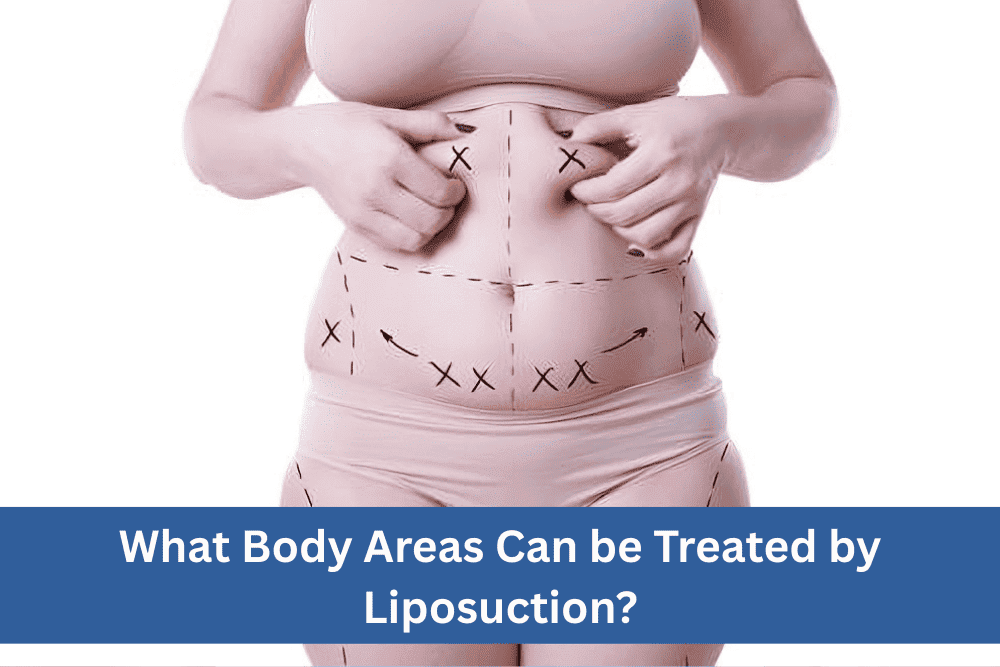
What Body Areas Can be Treated by Liposuction?

Liposuction is now the most popular cosmetic surgery in the world. Liposuction is an effective and safe procedure that liquefies and suctions away excess fat from different areas of the body. Regardless of how much one exercises and eats healthy, there are fat pads that would never move. And behold, along comes liposuction to the rescue – it reshapes the body, makes shape beautiful, and enhances self-confidence. Here, in this article, we shall write in detail what areas of the body can be treated with liposuction, how it is performed, advantages, and key points. We shall show step by step why it is necessary to select a professional doctor like Dr. PK Talwar in order to obtain safe and natural outcomes. Understanding Liposuction Liposuction is a surgical process where unwanted fat is suctioned from the targeted areas by suction method. It is not obesity treatment or weight loss therapy but rather a surgical body reshaping. The ideal candidate would be the person who is nearest to the ideal weight but has resistant fat which will not improve despite exercise and diet. Some of the newer methods utilized in liposuction are: Tumescent liposuction – most widely practiced and most secure. Ultrasound-assisted liposuction (UAL) – disintegrates the fat using sound waves. Laser-assisted liposuction (LAL) – dissolves the fat with laser heat. Power-assisted liposuction (PAL) – utilizes vibrating cannula for accuracy. Areas of the General Body Treated by Liposuction 1. Abdomen (Area of Stomach) Abdomen is one of the most frequent regions to have liposuction done. Belly fat is generally triggered by genes, age, or an imbalanced lifestyle. Liposuction is extremely successful in eliminating fat in the upper and lower abdomen, causing the area to become level and firm. 2. Thighs Outer thighs (saddlebags) and inner thighs are another area of concern in most individuals. Liposuction gives an athletic look, removes thigh rubbing, and gives a more proportionate lower body outline. 3. Hips and Flanks (“Love Handles”) Waistline fat, or love handles, will not decrease with dieting or exercise. Liposuction will contour the area, giving a narrower waist and more proportionate body profile. 4. Arms Most individuals are self-conscious about bagging upper arms. Liposuction eliminates excess fat, particularly in the triceps region, and has a firm arm contour. 5. Back Liposuction addresses fatty pads on the upper back (bra rolls) and lower back. It enhances body contour, posture, and attire fit. 6. Chest (for Men – Gynecomastia) Gynecomastia men are helped by chest liposuction. It eliminates fat and glandular tissue, forming a male contour to the chest. 7. Chin and Neck Double chin or projecting neck tends to make the face appear older and heavier. Chin and neck liposuction offers a slender jawline and youthful appearance. 8. Buttocks At times, liposuction is done on the buttocks for aesthetic purposes of shape and symmetry improvement. The procedure is, however, done with utmost care so that sagging is not caused. 9. Calves and Ankles Less common, but still performed, liposuction is also used to give a shape to calf, ankle, and lower legs, in an attempt to have a womanly-shaped leg. Advantages of Liposuction Destruction of fat cells permanently. Enhanced body shape and contour. Increased self-esteem. Better-fitting clothes and body proportions appear even. Can be paired with other procedures such as tummy tuck or breast reconstruction. Things to Consider in Mind Before Liposuction Liposuction is not a weight loss procedure, but one of the tune-ups. Patient ideal should be nearly close to his/her ideal weight. Skin should possess healthy elasticity to look smooth. Is not a replacement for good lifestyle habits. Why Choosing the Right Surgeon Matters With every plastic surgery procedure, skill of surgeon only matters. A seasoned and trained physician guarantees: Safety from the surgery. Natural results. Less risk of complications. Dr. PK Talwar, a highly experienced plastic and cosmetic surgeon, has extensive experience of performing body-contouring and liposuction procedures. His patients trust him due to newer methods, personalized attention, and dedication to providing the best results. Recovery and Outcome After Liposuction Recovery is dependent upon the site and extent of the extracted fat. All patients return to work in a week’s time. Bruising and swelling resolve in a 2–3 weeks’ period. The final outcome is achieved after 2–3 months after complete healing. Who is a Good Candidate for Liposuction? Liposuction is not for every body. You may qualify as a candidate if: You are nearly ideal weight but carry local fat pads. You possess good skin elasticity. You are in satisfactory general health. You have realistic expectations. The following are patients who should not have liposuction: Individuals with intractable medical conditions (diabetes, heart disease). Pregnant and lactating women. Individuals desiring instant weight loss outcome. Myths vs Facts Regarding Liposuction Myth 1: Liposuction is a form of weight loss surgery. Fact: Liposuction is contouring and not for weight loss. It best finds use in fat resistant zones. Myth 2: Fat will return after surgery. Myth: Dead fat cells are never gonna return again. Healthy living, however, is required. Myth 3: Liposuction is for women only. Fact: Men also get liposuction, particularly for chest (gynecomastia), stomach, and sides. Myth 4: Enormous scars are made by liposuction. Fact: Minimal cuts made are hardly noticeable after recovery. Myth 5: Liposuction is very painful. Fact: Pain is avoided and managed with anesthesia and advanced techniques. Lifestyle Tips After Liposuction To achieve long-term outcomes, patients must learn the following habits: Healthy Diet: Eat healthy food made of proteins, vegetables, and good fats. Daily Exercise: Cardio and strength training maintain results. Hydration: Appropriate water intake improves elasticity of the skin. Avoid Alcohol & Smoking: Both result in healing delay and influence results. Regular Check-ups: Frequent follow-ups with your surgeon facilitate safe recovery. Liposuction vs Non-Surgical Reduction of Fat We are all interested in how non-surgical procedures like CoolSculpting or fat-freezing stack up against liposuction. Aspect Liposuction Non-Surgical Fat Reduction Fat Removal Immediate and significant Gradual, smaller reduction Recovery 5–7 days downtime No downtime Areas Treated Almost all body

What Body Areas Can be Treated by Liposuction? Read More »

Open vs Closed Rhinoplasty – Which One Is Better for You?

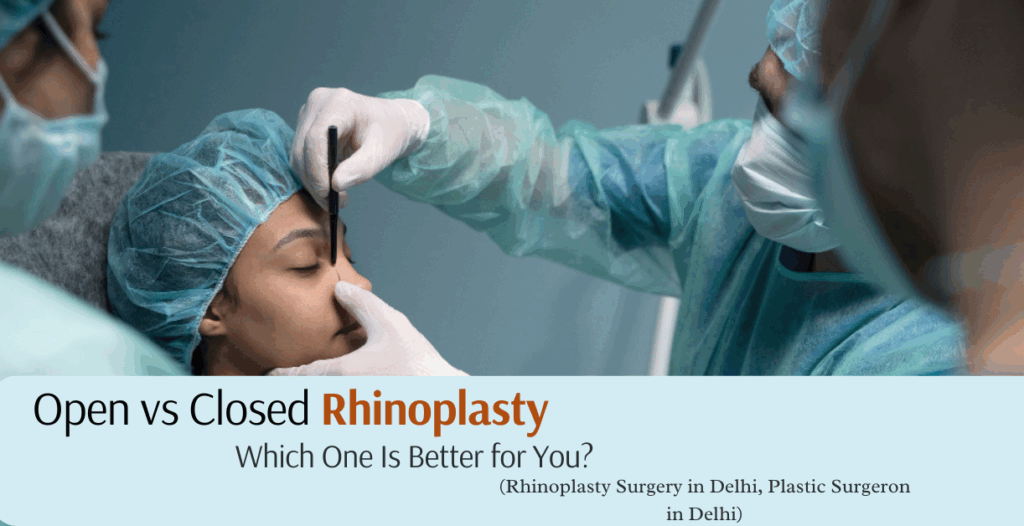
Open vs Closed Rhinoplasty – Which One Is Better for You?

Rhinoplasty, also known as a nose job, is one of the most popular cosmetic procedures in the world. People choose it not just for beauty enhancement but also for medical reasons like breathing issues, sinus problems, or correcting birth defects. If you’re planning to undergo Rhinoplasty surgery in Delhi, you’ve probably heard terms like “open rhinoplasty” and “closed rhinoplasty.” But what exactly do they mean, and which one is better for you? In this blog, we’ll explain the difference between open and closed rhinoplasty, their pros and cons, the recovery process, and most importantly, how to decide which technique is best for you. We’ll also discuss the rhinoplasty surgery cost in Delhi and why choosing an experienced Plastic Surgeon in Delhi like Dr. PK Talwar can make all the difference. What is Rhinoplasty? Rhinoplasty is a procedure which recontours or rebuilds the nose. Rhinoplasty may repair cosmetic issues like: Bridge hump Spreading nostrils Give your nose a more even shape Sagging or bulbous nasal tip Asymmetry It may also fix medical conditions like deviated septum, nasal obstructions, or breathing problems. This is why rhinoplasty isn’t just about appearance—it’s about function and self-esteem too. In India, the popularity of rhinoplasty is slowly on the rise. More and more people are now opting for the services of the best plastic surgeon in India to achieve natural-looking results. Open Rhinoplasty – What is it? Open rhinoplasty is a surgical technique where the surgeon cuts a small incision on the columella (skin between your nostrils) and also internal incisions. This permits the surgeon to elevation of the nasal skin and have unfettered access to the nasal anatomy. Benefits of Open Rhinoplasty: Better visibility of nasal anatomy Ideal for complicated or revision rhinoplasty cases Permits precise definition of the nasal tip and framework More control for the surgeon Downsides of Open Rhinoplasty: Slightly longer recovery time Tiny scar on the columella (although it will discolour with time) More swelling during the first few weeks Open rhinoplasty is typically advised when significant structural alteration is required. Closed Rhinoplasty – What Is It? Closed rhinoplasty, however, is done through incisions within the nostrils. This translates to no visible scars and less invasive surgery relative to the open method. Benefits of Closed Rhinoplasty: No scars are visible Faster recovery and less swelling The time used for surgery is shorter Ideal for minimal reshaping and adjustments Drawbacks of Closed Rhinoplasty: Less visual for the surgeon Completely unsuitable for complicated cases Less accurate when shaping the tip of the nose Closed rhinoplasty is generally best for those requiring minimal adjustments and a quicker recovery. Open vs Closed Rhinoplasty – The Key Differences Feature Open Rhinoplasty Closed Rhinoplasty Incision External (columella + inside nostrils) Internal (only inside nostrils) Visibility High – full access to nasal structures Limited Scarring Small scar on columella (fades) No visible scar Recovery Time Slightly longer Faster Best for Complex, revision, structural reshaping Minor changes, cosmetic adjustments Which One Is Better for You? Your decision between open and closed rhinoplasty will depend on: The intricateness of your case Your aesthetic problems Functional problems (breathing, septum issues) The surgeon’s expertise Open rhinoplasty will be best if you require significant corrections such as tip improvement, asymmetry correction, or revision surgery. However, if you require minimal improvements, closed rhinoplasty also suits you. This is where an expert plastic surgeon in Delhi steps in. A professional like Dr. PK Talwar, who has been practicing for years with numerous cosmetic surgeries, can take you through the most suited option based on your individual requirements. Rhinoplasty Surgery Cost in Delhi Another of the most frequent questions of the patients is the Rhinoplasty Surgery Cost in Delhi. It could differ based on: The complexity of the procedure Surgeon expertise Hospital infrastructure and location Anesthesia and medication charges Delhi rhinoplasty surgery would, on average, take between ₹80,000 to ₹2,50,000. Open rhinoplasty could be a bit more expensive owing to its sensitivity. If you are in search of an expert plastic surgeon in India such as Dr. PK Talwar, you are assured of fairness in fees and high-quality surgical services. Recovery After Rhinoplasty Whether you undergo open or closed rhinoplasty, recovery is required. Here is what happens: First Week: Nasal splint (removed after 7–10 days), swelling, and bruising 2–3 Weeks: Bruising has largely faded, and you can resume light activity 1–2 Months: Swelling is much less; results begin to become noticeable 6–12 Months: Results are noticeable For closed rhinoplasty, the process is accelerated, and for open rhinoplasty, it might take a bit longer. Why Dr. PK Talwar for Delhi Rhinoplasty Surgery? Experience is the key when it comes to face surgery. Dr. PK Talwar is one of the most dependable names in the field of cosmetic and reconstructive surgery. He has performed thousands of surgeries and is regarded as one of the best plastic surgeons of India. Why patients choose Dr. PK Talwar: Over 30 years of surgical experience Skill in open and closed rhinoplasty Advanced techniques with a natural look Unrestricted discussion regarding the cost of rhinoplasty surgery in Delhi Long-term follow-up and personalized treatment Selecting an appropriate surgeon guarantees safety, accuracy, and best result for your rhinoplasty. Learning to Know Why People Choose Rhinoplasty Let us first learn why most people in India and worldwide opt for rhinoplasty before comparing open and closed methods. Cosmetic Reasons: Enhancing the size or shape of the nose Refining the nose to increase its symmetry Shaping the tip or bridge to create a more pointed appearance Increasing overall facial harmony Functional Reasons: Straightening a deviated septum Correcting breathing issues Correcting fractures in the nose caused by accidents Correcting nasal birth deformities In Delhi, everyone—students, working professionals, and even foreign patients—visits the top plastic surgeon in Delhi for rhinoplasty due to the fact that the city provides world-class facilities at significantly lower rates compared to Western nations. This increasing demand makes learning the distinction between open and closed rhinoplasty a necessity so that patients are properly informed. Step-by-Step:

Open vs Closed Rhinoplasty – Which One Is Better for You? Read More »
How Long Does It Take to Breathe Normally After Rhinoplasty?

How Long Does It Take to Breathe Normally After Rhinoplasty?

Breathe is the most natural act of life, but we don’t value its importance until it becomes difficult. Rhinoplasty, or a nose job, is one of the world’s most common cosmetic and functional operations. Although many people undergo the procedure to make the shape and appearance of their nose better, one of the biggest concerns remains: “How long does it take to breathe normally after rhinoplasty?” If you are eager to have rhinoplasty surgery in Delhi, this guide will give you everything you require about recovery from breathing. We will also describe the impact Rhinoplasty Surgery Cost in Delhi, your Plastic Surgeon in Delhi, and the Indian health care system, as a whole, can have on your recovery process. Throughout the blog, we’ll also highlight why Dr. PK Talwar, a leading Plastic Surgeon in India, is trusted by patients from across the country and abroad. Why Rhinoplasty Affects Breathing Rhinoplasty is not just about aesthetics—it involves reshaping the bone, cartilage, and soft tissue of the nose. Since the nose plays a central role in airflow, any surgical changes can temporarily affect breathing. Here’s why: Post-Operative Swelling: Swelling in the nasal passages during healing can reduce airflow. Internal Splints or Packing: Internal splints or packing to hold the new structure in place will make breathing feel stuffy for the initial week. Healing of Soft Tissue: The mucosa lining inside the nose heals slowly. Structural Adjustments: With septum correction (septoplasty), the airflow path is changed, and an adjustment period is required. These are typically temporary in most instances. In fact, most patients who had nasal obstruction pre-operatively (due to a deviated septum or large turbinates) notice their breathing to significantly improve after recovery. Breathing Recovery Timeline After Rhinoplasty (Detailed) While every patient heals differently, doctors generally describe breathing recovery in phases: Time After Surgery What Patients Feel Breathing Status Week 1 Nose feels blocked due to swelling & splints. Breathing mostly through mouth. Week 2 Splints/packing removed. Swelling slowly reduces. Slight airflow improvement. Weeks 3–4 Less congestion, minor crusting. Breathing easier but not 100% normal. 1–2 Months Major swelling subsides, tissues settle. Comfortable breathing for most patients. 3–6 Months Nose structure stabilizes, airflow improves. Breathing feels almost natural. 6–12 Months Final results visible, tissues fully healed. Completely normal breathing restored. On average, patients may have easy breathing by 1–3 months, but complete natural breathing may take up to 1 year. Cosmetic vs Functional Rhinoplasty: Differences in Breathing Recovery Not all rhinoplasty is the same. Recovery depends on the type of rhinoplasty performed: Cosmetic Rhinoplasty (Shape Directed) Primarily for rebuilding the shape of the nose. Temporary breathing difficulties due to swelling. Recovery: Generally normal breathing in 1–2 months. Functional Rhinoplasty (Breathing Directed) Corrects structural issues (e.g., deviated septum). Patients will notice better breathing than original after 3–6 months. Combined Rhinoplasty (Shape + Function) Improves look and airflow. Recovery may be a little longer but result is more rewarding. Factors Affecting Breathing Recovery Surgical Procedure: Closed rhinoplasty tends to have less swelling compared to open rhinoplasty. Surgeon’s Experience: An extremely experienced Plastic Surgeon in Delhi makes precise corrections that reduce long-term breathing issues. Patient’s Anatomy: Nasal abnormalities prior to this can extend recovery. Post-Procedure Care: Following guidelines like nose-blowing prevention and refraining from heavy physical activity accelerates recovery. General Wellbeing: Healthy diet followers, good immunity possessors, and non-smokers recover fast. Patient FAQs About Breathing After Rhinoplasty 1. Is it normal to only breathe through my mouth during the first week? Yes. Due to swelling and splints, patients largely rely on breathing through their mouths initially. 2. Am I ever going to be worse off for breathing after surgery? eldom, when performed by an inexperienced surgeon. Choosing an experienced Plastic Surgeon in India like Dr. PK Talwar minimizes risks. 3. When can I exercise again? Light walking is fine after 2 weeks, but avoid heavy exercises for at least 4–6 weeks because they lead to swelling. 4. Will my breathing still improve after 6 months? Yes. Small internal swelling may last up to a year, so slow improvement is normal. 5. What if my breathing does not get better? Revision surgery might be necessary in occasional cases, which is why selecting the appropriate surgeon in the first place is important. Rhinoplasty Surgery Cost in Delhi vs Abroad Many patients wonder about the cost difference between Delhi and countries like the US, UK, or Dubai. Location Average Rhinoplasty Cost Delhi, India ₹80,000 – ₹2,50,000 USA ₹5,00,000 – ₹8,00,000 UK ₹4,00,000 – ₹6,00,000 Dubai ₹3,50,000 – ₹6,00,000 Clearly, rhinoplasty surgery in Delhi is far more affordable while offering world-class medical expertise, especially with renowned surgeons like Dr. PK Talwar. Myths vs Facts About Breathing After Rhinoplasty Myth Fact “I will never breathe normally again after rhinoplasty.” Temporary congestion is common, but most patients breathe better long-term. “Breathing problems mean surgery failed.” Not true—healing takes time, and breathing gradually improves. “Only cosmetic rhinoplasty causes breathing issues.” Even functional rhinoplasty causes temporary swelling, but results are positive. “Rhinoplasty is only for looks, not function.” Rhinoplasty also corrects deviated septum & breathing problems. “If I can’t breathe in 2 weeks, something is wrong.” Full natural breathing may take 3–6 months for most patients. Real-Life Example of Breathing Recovery One of Dr. PK Talwar’s Delhi patients underwent combined rhinoplasty to repair a deviated septum and to enhance the bridge of the nose. Week 1: Felt completely stopped up and cranky. Week 3: Noted improvement in breathing. Month 2: Breathing normally when engaged in normal activities. Month 6: Not just breathing effortlessly but also being comfortable with facial appearance. This shows how patience and proper aftercare can lead to aesthetic as well as functional satisfaction. Why Choose Dr. PK Talwar for Rhinoplasty Surgery in Delhi Experience and perfection are of utmost value in nasal surgery. Dr. PK Talwar is one of the most trusted names as a Plastic Surgeon in Delhi and a leading Plastic Surgeon in India. Over 30 years of experience in cosmetic and plastic surgery. Specialized in cosmetic

How Long Does It Take to Breathe Normally After Rhinoplasty? Read More »

Can Rhinoplasty Fix Sinus & Breathing Problems?

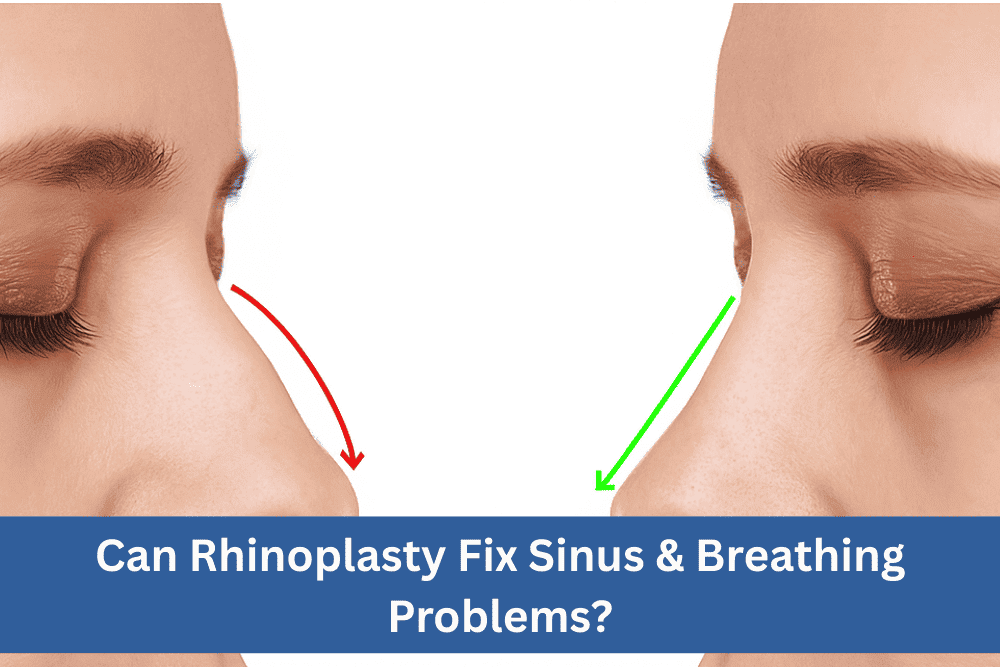
Can Rhinoplasty Fix Sinus & Breathing Problems?

While most people are employing the term “rhinoplasty,” the first to be heard is a “nose job” that is done solely for appearance. Indeed, rhinoplasty is one of the world’s most sought-after aesthetic procedures, yet what most people don’t realize is that it also offers great medical advantages. If you are a victim of chronic sinusitis, breathing issues, or nasal blockage, you may be surprised to find that Delhi rhinoplasty surgery can be of help. In addition to restructuring the nose, it also fixes inner structural flaws. Your nose’s functioning as well as looks get better. Here in this knowledge blog, we will analyze whether rhinoplasty can treat sinus and breathing issues, procedure, recovery, and cost, and why it’s so crucial to consult a good plastic surgeon in Delhi like Dr. PK Talwar. What is Rhinoplasty? Rhinoplasty is cosmetic surgery that remodels or shapes the nose. It can be either for shape, function, or both depending on the patient’s requirement. • Cosmetic Rhinoplasty – Performed to enhance the exterior shape of the nose, i.e., size adjustment, altering the tip of the nose, or enhancing asymmetry. • Functional Rhinoplasty – Performed for better breathing, correction of a crooked septum, correcting nasal valve collapse, or to fix breathing problems. • Combined Rhinoplasty – Aesthetic and functional reasons combined, most often performed together so the patient gets both health and beauty benefits. Unlike other cosmetic surgery, which is strictly esthetic, rhinoplasty is the only one that is life-altering on the outside and in. How Nose Structure Affects Breathing and Sinus Health The nose is not just a face landmark—it’s the primary airway pathway used to breathe. Abnormal nasal structure can block airflow. It can cause: Symptom / Condition Description Chronic Nasal Congestion Persistent blockage in the nose due to swelling, deviated septum, or polyps. Mouth Breathing Inability to breathe comfortably through the nose, leading to constant mouth breathing. Snoring & Nighttime Disruptions Airflow obstruction causes snoring, disturbed sleep, and sometimes sleep apnea. Chronic Sinus Infections Repeated sinus infections due to poor nasal drainage and airflow blockage. Headaches & Facial Tension Pressure from blocked sinuses causes headaches, heaviness, and facial discomfort. Even an occasional nasal deflection, like a bent septum, can be troublesome. Rhinoplasty is usually then advisable not only for appearance but to restore normal nasal function. Can Rhinoplasty Correct Sinus Issues? Yes—if sinus issues are concurrent with structure nose abnormalities. 1. Chronic Sinusitis Sinusitis results from obstruction or swelling of the sinuses, containing bacteria and mucus. The condition is alleviated by septoplasty with rhinoplasty. 2. Improved Sinus Drainage The nasal passages are full of mucus, and sinuses can’t drain freely. It infects and hurts the face. Functional rhinoplasty makes the passages more open so drainage improves. 3. Decreased Infections Improved drainage and air flow reduce the incidence of chronic sinus infection through rhinoplasty. Patients were previously compelled to depend on antibiotics; because drainage and airflow were improved due to rhinoplasty, they no longer need such dependency as often. 4. Case Example A patient who was suffering from chronic sinus headaches caused by severely deviated septum was operated upon for rhinoplasty in Delhi. Not only did her nose become straighter post-operatively, but sinus infections were significantly minimized, and she could breathe just as well through both nostrils. Can Breathing Be Corrected with Rhinoplasty? Yes. One of the biggest reasons functional rhinoplasty is done is for this very purpose. Deviated Septum One of the most prevalent causes of respiratory distress. A deviated septum reduces a nostril or both. Rhinoplasty septoplasty realigns this, maintaining the airway patent. Collapse of Nasal Valve Nasal valve is nasally the narrowest region of nasal airway. When flaccid valve collapses in, respiration is obstructed. Rhinoplasty employs cartilage grafts to maintain the valve patent, so it won’t collapse closed. Enlarged Turbinates Turbinates are nasal bones that control air flow. If they are too large, they cause breathing difficulties. They can be reduced without harm by rhinoplasty. Trauma or Injury Nasal fracture usually displaces the nose and causes difficulty with breathing. May restore function and appearance. Congenital Problems People are born with nasal anatomical defects which prevent them from breathing. These are fixed by surgery and the quality of life is enhanced. Cosmetic vs Functional Rhinoplasty Characteristic Cosmetic Rhinoplasty Functional Rhinoplasty Combined Rhinoplasty Category Details Objective – Enhance appearance – Fix breathing or sinus problems – Improve both shape and function Areas of Interest – Nose size, shape, tip, and symmetry – Septum, nasal valves, and airway passage – Overall facial harmony for looks and health Candidates for Procedure – Individuals unhappy with the shape of their nose – Patients with breathing difficulties or sinusitis – People seeking both functional and cosmetic improvements Payment – Typically self-paid (cosmetic purposes) – Sometimes covered by insurance if medically necessary (e.g., for breathing/sinus issues) This sets rhinoplasty apart—it can reshape your face and enhance health simultaneously. Perks of Rhinoplasty for Sinus & Breathing Disorders 1. Better Breathing – Mouth breathing and congestion are history. 2.Less Infections – The sinuses drain properly, ending congestion and headaches. 3. Better Sleep – Snoring and sleep apnea symptoms vanish. 4. More Energy – Better oxygenation cuts down on fatigue. 5. Greater Confidence – Not only are patients healthier, but now they are also more harmonious and pleasing-looking noses. Myths vs. Facts Regarding Rhinoplasty • Myth: Rhinoplasty is solely aesthetic. Fact: Conditions such as deviated septum, clogged sinuses, and breathing handicaps are treated by functional rhinoplasty. • Myth: Breathing problems always require drugs, not surgery. Fact: Drugs can temporarily correct, but if it is a structural cause, surgery alone could break it. • Myth: Outcomes of rhinoplasty are just cosmetic. Fact: Overwhelming number of patients consistently report miraculous improvement in daytime breathing and general feeling of wellbeing. Rhinoplasty Surgery Delhi Delhi is one of the most modern centers for plastic and reconstructive surgery. Patients undergoing rhinoplasty surgery travel from all over India as well as internationally to Delhi because: • State-of-the-art hospitals equipped with state-of-the-art technology • Tourism encouraged

Can Rhinoplasty Fix Sinus & Breathing Problems? Read More »